


Blog | Blockchain
Blockchain Cross Border Payments Solutions
Understand permissioned blockchains, their security, controlled access, and enterprise benefits for building private, scalable blockchain networks.
- Blogs

Blockchain cross border payments solutions
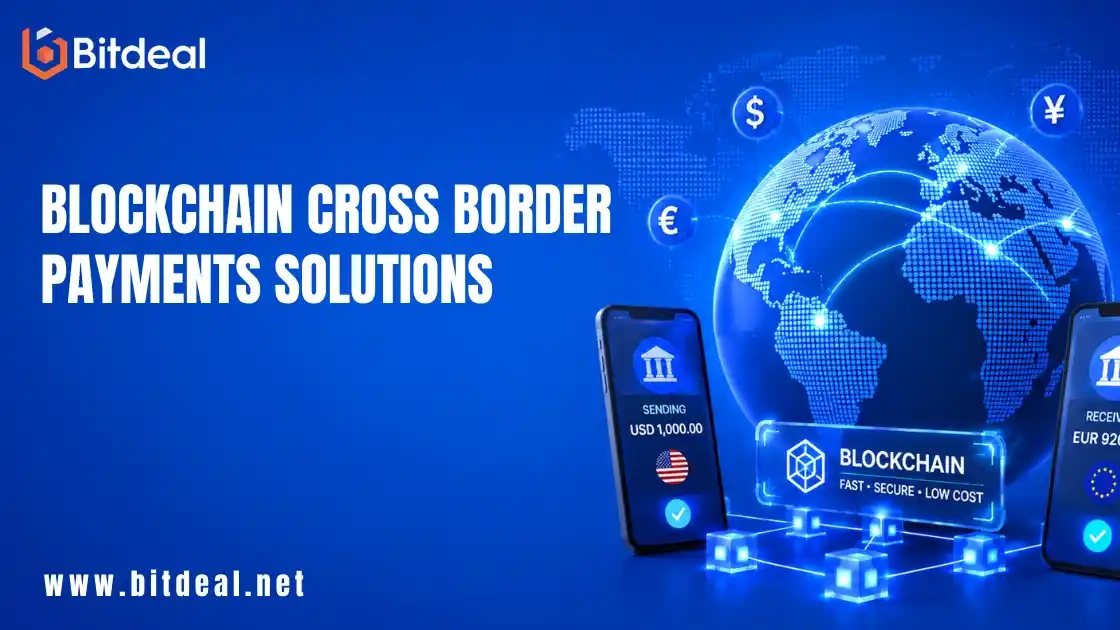
In an increasingly interconnected world, the demand for efficient cross-border payment solutions has never been greater. Blockchain Development is emerging as a game-changer in this arena, offering numerous advantages over traditional payment systems. This article delves into the best blockchain payment solutions, explores how blockchain improves cross-border payments, and examines the challenges and regulations involved. We will also look at the benefits of blockchain in payments, compare various blockchain payment platforms, and discuss the future of blockchain payments.
Understanding Cross-Border Payments
Cross-border payments refer to transactions that occur between parties in different countries. These payments can be for goods, services, or remittances and often involve multiple currencies. Traditional methods, such as banks and payment processors, can be slow, costly, and fraught with complications. Blockchain technology aims to address these issues by providing a decentralized and transparent alternative.
How Blockchain Improves Cross-Border Payments
Blockchain enhances cross-border payments in several ways
Speed: Transactions can be processed in real-time, significantly reducing the time it takes for funds to transfer across borders.
Cost: Blockchain eliminates intermediaries, which can lead to lower transaction fees and better exchange rates.
Transparency: All transactions are recorded on a public ledger, providing a clear audit trail and reducing fraud.
Best Blockchain Payment Solutions
Several blockchain payment solutions are leading the charge in revolutionizing cross-border payments
Ripple: Known for its fast transaction speeds and low fees, Ripple is designed specifically for cross-border payments.
Stellar: Stellar focuses on facilitating cross-border transactions for the unbanked, making it a vital player in financial inclusion.
Ethereum: While primarily known for smart contracts, Ethereum also supports various payment solutions that leverage its blockchain.
Blockchain Payment Platforms Comparison
When comparing blockchain payment platforms, consider factors such as transaction speed, fees, and user experience. Ripple and Stellar often come out on top for cross-border payments due to their focus on speed and cost-effectiveness. Ethereum, while versatile, may have higher fees during peak usage times.
Benefits of Blockchain in Payments
The advantages of using blockchain for payments extend beyond just speed and cost
Security: Blockchain employs cryptographic techniques that enhance transaction security.
Decentralization: Reducing reliance on central authorities mitigates risks associated with government interference and currency fluctuations.
Accessibility: Blockchain can provide payment solutions to underserved populations, fostering financial inclusion.
Blockchain Remittance Services
Remittances are a significant aspect of cross-border payments, especially for migrant workers. Blockchain remittance services can offer lower fees and faster transfers compared to traditional methods. Services like SendFriend and BitPesa are examples of how blockchain is reshaping remittance markets.
Cross-Border Payment Challenges with Blockchain
Despite its advantages, blockchain technology faces challenges in cross-border payments
Regulatory Compliance: Navigating the regulatory landscape can be complicated, as different countries have varying rules regarding
cryptocurrencies.
Scalability: Some blockchain networks struggle to handle large volumes of transactions, which can lead to delays.
Adoption: Many businesses and consumers are still unfamiliar with blockchain technology, which can hinder widespread adoption.
Blockchain Payment Processing Fees
One of the key benefits of blockchain payments is the reduction in processing fees. Traditional payment systems often charge high fees for cross-border transactions, but blockchain can significantly lower these costs. However, it's essential to consider the fees associated with specific blockchain platforms, as they can vary.
Top Blockchain Payment Providers
Some of the top blockchain payment providers include
Coinbase Commerce: A popular platform for merchants to accept cryptocurrency payments.
BitPay: Offers a range of services for businesses looking to accept Bitcoin and other cryptocurrencies.
CoinGate: Provides a user-friendly interface for accepting payments in various cryptocurrencies.
Future of Blockchain Payments
The future of blockchain payments looks promising, with ongoing developments in technology and increasing acceptance by businesses and consumers. As regulatory frameworks evolve and more people become familiar with blockchain, we can expect to see broader adoption and innovation in this space.
How to Use Blockchain for Payments
- Using blockchain for payments involves several steps
- Choose a blockchain payment provider that suits your needs.
- Create a digital wallet to store your cryptocurrencies.
- Follow the provider's guidelines to set up payment processing.
- Educate your customers about how to use blockchain for transactions.
Blockchain vs. Traditional Payment Systems
When comparing blockchain to traditional payment systems, the differences are stark
Speed: Blockchain transactions can be completed within minutes, while traditional systems may take days.
Cost: Blockchain often incurs lower fees due to the elimination of intermediaries.
Security: Blockchain's decentralized nature enhances security compared to centralized systems.
Cross-Border Payment Regulations and Blockchain
Understanding the regulatory landscape is crucial for businesses utilizing blockchain for cross-border payments. Different countries have different regulations regarding cryptocurrencies, which can affect how blockchain payments are processed. Staying informed about these regulations can help businesses navigate compliance challenges.
Conclusion
Blockchain technology is poised to revolutionize cross-border payments, offering solutions that are faster, cheaper, and more secure than traditional methods. As the technology continues to evolve, businesses and consumers alike stand to benefit from its capabilities.
Get A Demo
We are glad to announce that, Bitdeal is making one more milestone in its journey. As Web3 technologies becomes more dominant and lucrative, bitdeal sets its footmark in AI and Gaming Space. Explore our all-new AI and Gaming Solutions below here.