


Blog | Blockchain
Blockchain Voting Solution
Blockchain voting solutions ensure secure, transparent, and tamper-proof elections with decentralized technology for trusted digital voting systems.
- Blogs

Blockchain voting solution
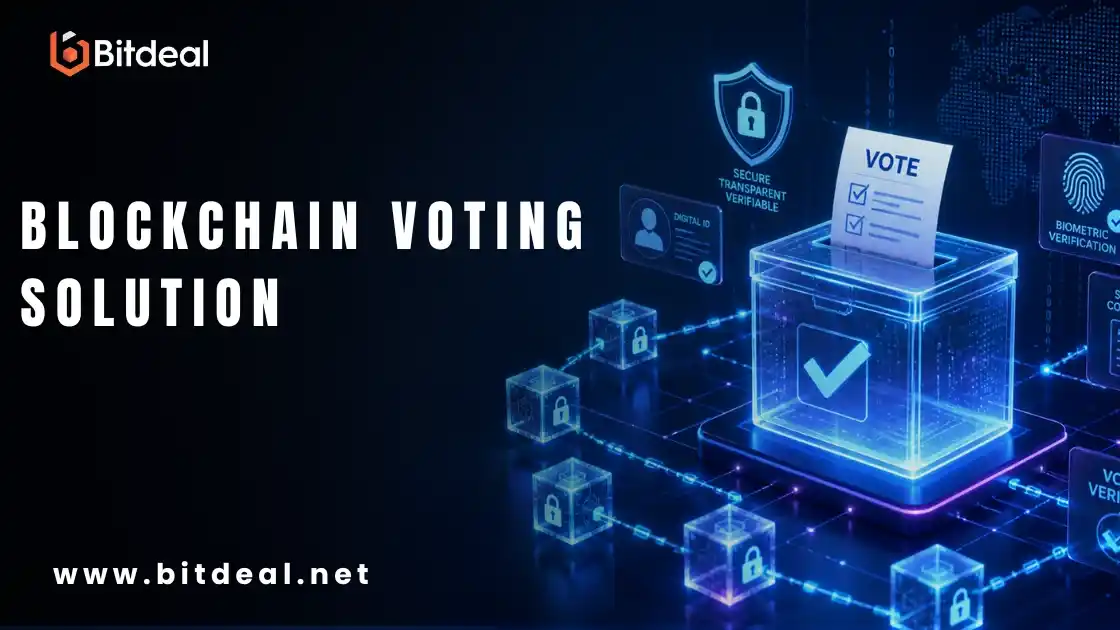
As the world evolves, so do our methods of governance and decision-making. The advent of Blockchain Development has introduced a revolutionary approach to voting, promising enhanced security, transparency, and efficiency. This article delves into the intricacies of blockchain voting systems, exploring their benefits, how they function, and the future they hold for democratic processes.
Understanding Blockchain Voting
Blockchain voting systems utilize distributed ledger technology to record votes securely and transparently. Unlike traditional voting methods, which often face challenges like fraud and tampering, blockchain offers a decentralized solution that enhances trust in electoral processes.
How Blockchain Voting Works
At its core, a blockchain voting system works by creating a digital ledger that records each vote as a transaction. This ledger is immutable, meaning once a vote is recorded, it cannot be altered. Each voter is assigned a unique cryptographic key, ensuring that their vote remains anonymous yet verifiable.
Benefits of Blockchain Voting
The advantages of implementing a blockchain voting system are numerous
Security: Blockchain's cryptographic features protect against unauthorized access and manipulation.
Transparency: All transactions are visible on the blockchain, allowing for public verification.
Efficiency: Automated processes reduce the time and cost associated with traditional voting methods.
Decentralized Voting Systems
Decentralization is a key feature of blockchain voting. By removing a central authority, the risk of corruption or bias is significantly diminished. Each participant in the network has equal authority, fostering a more democratic process.
Case Studies in Blockchain Voting
Real-world implementations of blockchain voting systems provide valuable insights into their effectiveness. For instance, the 2020 Utah County pilot project allowed overseas voters to cast ballots using a blockchain-based application, demonstrating the technology's potential to enhance accessibility and security.
Blockchain Voting Software
Various blockchain voting solutions are available, each offering unique features tailored to different electoral needs. These platforms often include user-friendly interfaces, robust security measures, and integration capabilities with existing electoral systems.
Implementing Blockchain Voting
Transitioning to a blockchain voting system involves several steps
- Assessment: Evaluate the current voting system and identify areas for improvement.
- Selection: Choose a suitable blockchain voting platform that aligns with the electoral requirements.
- Testing: Conduct pilot projects to test the system's functionality and security.
- Deployment: Roll out the system for actual elections, ensuring proper training for all stakeholders.
Blockchain Voting Regulations
As blockchain voting gains traction, it is crucial to establish regulations that govern its use. Legal frameworks must address issues such as voter privacy, data security, and the integrity of the voting process.
The Future of Blockchain Voting
The potential of blockchain voting extends beyond mere efficiency. As technology continues to evolve, future developments may include enhanced voter engagement tools, real-time vote tracking, and integration with other democratic processes.
Comparing Blockchain Voting Platforms
When considering blockchain voting solutions, it is essential to compare various platforms based on criteria such as security features, user experience, and compliance with regulations. This comparison enables electoral bodies to make informed decisions that best serve their constituents.
Advantages of Blockchain in Voting
In summary, the advantages of blockchain in voting are compelling. From increased security and transparency to improved voter engagement, blockchain technology has the potential to redefine how elections are conducted globally.
Conclusion
As we stand on the brink of a new era in democratic processes, the integration of blockchain technology in voting systems is not just a possibility but a necessity. By embracing this innovative approach, we can enhance the integrity of elections and restore public trust in democratic institutions.
For more insights and solutions on blockchain technology, connect with us at bitdeal.net.
Get A Demo
We are glad to announce that, Bitdeal is making one more milestone in its journey. As Web3 technologies becomes more dominant and lucrative, bitdeal sets its footmark in AI and Gaming Space. Explore our all-new AI and Gaming Solutions below here.