


Blog | Blockchain
Blockchain vs DLT: A Comprehensive Guide
Understand the key differences between blockchain and DLT, including security, decentralization, transparency, and business use cases.
- Blogs

Blockchain vs dlt a comprehensive guide
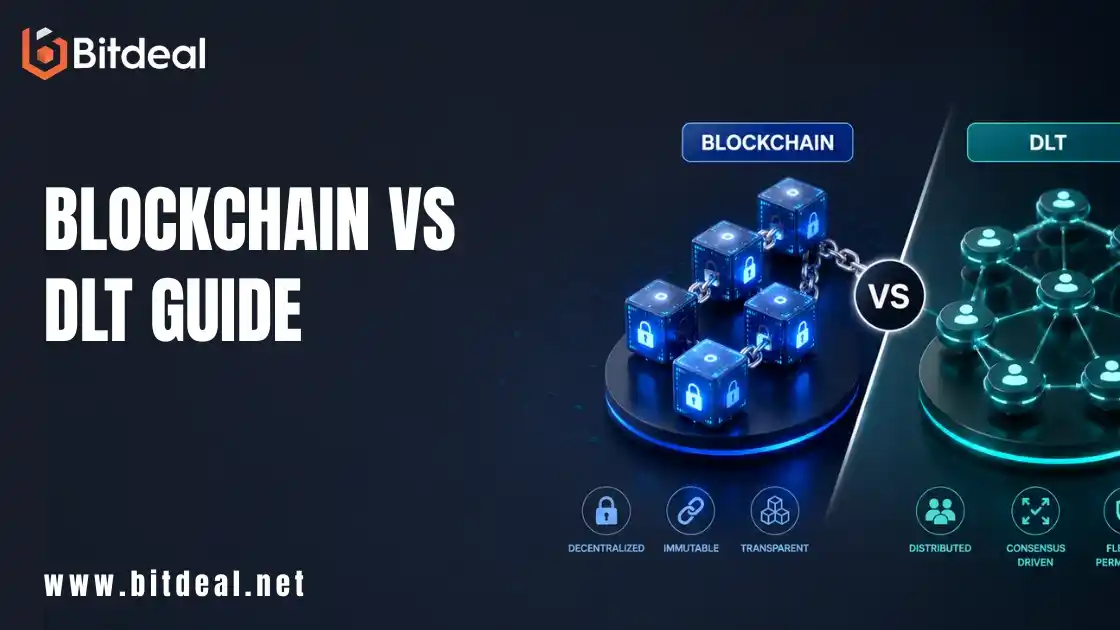
In the rapidly evolving landscape of digital technology, understanding the nuances between blockchain and distributed ledger technology (DLT) is essential for businesses and individuals alike. This guide will delve into the differences, applications, and future potential of these technologies, providing insights that can help you navigate the complex world of digital transactions and data management.
What is Blockchain?
Blockchain is a specific type of distributed ledger technology that organizes data into blocks, which are then chained together in a chronological order. Each block contains a set of transactions, and once a block is filled, it is added to the chain in a way that is immutable and transparent. This structure allows for secure and verifiable transactions without the need for a central authority.
Understanding Distributed Ledger Technology (DLT)
Distributed Ledger Blockchain Development refers to a broader category of technologies that distribute data across multiple locations. Unlike blockchain, DLT does not necessarily organize data into blocks. Instead, it allows for various structures and methods of data storage and validation. DLT can be permissioned or permissionless, and its applications extend beyond cryptocurrencies to various sectors, including finance, supply chain, and healthcare.
Key Differences Between Blockchain and DLT
The primary distinction between blockchain and DLT lies in their structure and functionality. Blockchain is a type of DLT, but not all DLTs are blockchains. Here are some key differences
Structure: Blockchain organizes data in blocks, while DLT can use various structures.
Consensus Mechanisms: Blockchain typically uses proof-of-work or proof-of-stake, while DLT may employ different consensus methods.
Use Cases: Blockchain is widely recognized for its role in cryptocurrencies, whereas DLT has broader applications across various industries.
Advantages of Blockchain Over DLT
While both technologies have their merits, blockchain offers specific advantages
Transparency: Every transaction is recorded on the blockchain, making it easily auditable.
Security: The cryptographic methods used in blockchain enhance security, reducing the risk of fraud.
Decentralization: By eliminating the need for a central authority, blockchain fosters trust among users.
DLT Use Cases
DLT has a wide range of applications across various sectors
Finance: DLT is used for real-time settlement of transactions and reducing fraud.
Supply Chain: It enhances traceability and transparency in supply chains.
Healthcare: DLT can securely store patient records, ensuring privacy and accessibility.
Blockchain Applications
Blockchain technology is making waves in numerous fields
Cryptocurrencies: The most well-known application of blockchain.
Smart Contracts: Automated contracts that execute when conditions are met.
Voting Systems: Secure and transparent voting processes.
Implementing Blockchain in Your Business
To implement blockchain technology effectively, consider the following steps
Identify Use Cases: Determine where blockchain can add value in your organization.
Choose the Right Platform: Evaluate various blockchain platforms based on your needs.
Develop a Strategy: Create a clear roadmap for implementation.
DLT Platforms Comparison
When choosing a DLT platform, consider factors such as scalability, security, and community support. Some popular DLT platforms include
- Hyperledger Fabric: A permissioned DLT ideal for enterprise solutions.
- Corda: Focused on financial services and privacy.
- Quorum: A permissioned version of Ethereum designed for enterprises.
Blockchain Security Features
Security is a critical aspect of blockchain technology. Key features include
Cryptography: Ensures data integrity and confidentiality.
Consensus Mechanisms: Prevents unauthorized changes to the blockchain.
Decentralization: Reduces the risk of single points of failure.
Future of Blockchain and DLT
The future of blockchain and DLT looks promising, with ongoing developments in scalability, interoperability, and regulatory frameworks. As industries continue to explore these technologies, we can expect more innovative applications and improved efficiencies.
Case Studies: Blockchain vs DLT
Examining real-world case studies can provide valuable insights
Supply Chain Management: Companies like IBM and Walmart are utilizing blockchain for enhanced traceability.
Finance: Ripple’s DLT is transforming cross-border payments.
Conclusion
Understanding the differences between blockchain and DLT is crucial for making informed decisions in today’s digital landscape. As these technologies continue to evolve, staying informed will empower businesses and individuals to leverage their full potential.
Get A Demo
We are glad to announce that, Bitdeal is making one more milestone in its journey. As Web3 technologies becomes more dominant and lucrative, bitdeal sets its footmark in AI and Gaming Space. Explore our all-new AI and Gaming Solutions below here.