


Blog | Web 3
Decentralized Social Media Platforms (SocialFi): A Complete Overview
Decentralized Social Media Platforms (SocialFi) redefine online interaction by combining social networking with blockchain technology, enabling user ownership, transparent governance, and monetization without centralized control.
- Blogs

Decentralized social media platforms
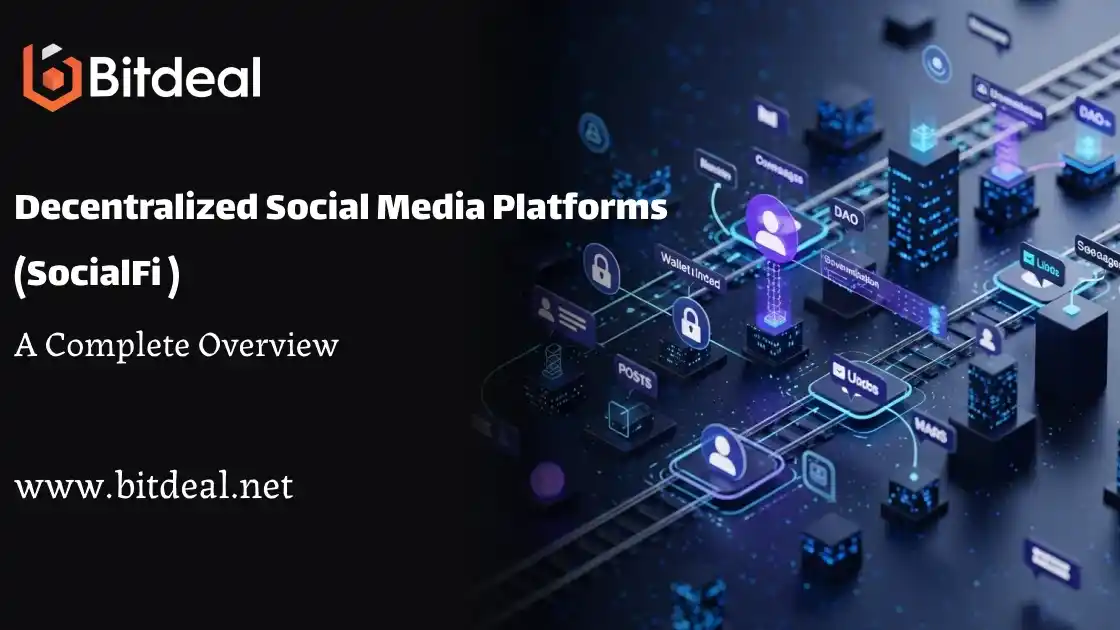
Decentralized social networks, commonly known as SocialFi, introduce a new approach to online interaction by combining social engagement with decentralized financial systems. Unlike regular social platforms, SocialFi focuses on user ownership, transparent value exchange, and community-based regulation.
What is SocialFi?
SocialFi refers to decentralized social networks that integrate blockchain technology and financial rewards into social platforms. Instead of depending on centralized companies to control data and monetization, SocialFi allows users to own their content, identity, and digital assets. These platforms operate using decentralized infrastructure, giving communities greater control and transparency. By combining social interaction with blockchain-based rewards, SocialFi allows users to participate actively in platforms while earning directly from their contributions.
Why Social Platforms Are Combining With Decentralized Finance
Regular social media sites make money from what users do, but the site owners keep most of it. By adding decentralized finance, these platforms can share the profit more fairly with everyone—users, creators, and groups. This mix allows direct rewards between people, opens ways to earn money, and reduces the need for central controllers. That’s why DeFi development services is a key part of SocialFi systems.
Types of SocialFi Models
- SocialFi platforms operate under different models based on how value and governance are structured
- Creator-based models provide infrastructure that allows direct monetization through tokens, NFTs, or subscriptions.
- Community-based models provide infrastructure that allows shared ownership and leadership through decentralized voting mechanisms.
- Protocol-based models provide infrastructure that supports multiple social applications within a single ecosystem.
- Middleware-based models provide infrastructure that connects the protocol layer with applications, allowing connectivity and smooth integration across platforms.
Core Features of SocialFi Platforms
SocialFi platforms combine social engagement with blockchain technology to offer openness, ownership, and financial rewards to users.
Social Trading and DeFi
Users can engage in social trading, earn rewards, and participate in decentralized financial activities directly within the platform.
Censorship Resistance
Content and interactions are stored on decentralized networks, so they cannot be randomly removed or controlled.
Decentralized Governance (DAOs)
Users participate in decision-making through decentralized autonomous organizations, influencing platform rules and development.
NFTs for Digital Assets
Digital content and assets can be tokenized as NFTs, allowing creators to monetize and trade unique items securely.
Token-Based Rewards
Platforms reward user activity with tokens, rewarding engagement and contribution while allowing real economic value.
Interoperability
SocialFi platforms can connect with other blockchain applications and networks, allowing smooth cross-platform interaction and asset transfer.
How SocialFi Platforms Work
SocialFi platforms use blockchain technology and decentralized finance to create transparent, user-owned social networks.
Step 1⏤ User Onboarding
Users connect using blockchain wallets instead of centralized accounts, allowing interaction across decentralized social media platforms.
Step 2⏤ Content Creation
Users generate posts, media, and interactions, which are recorded on-chain for transparency and ownership.
Step 3⏤ Incentive Distribution
Smart contracts automatically reward users with tokens or digital assets based on engagement and contribution.
Step 4⏤ Governance Participation
Users take part in decentralized governance, voting on platform rules, content moderation, and feature updates.
Step 5⏤ Integration with Other Services
Middleware and protocol layers make sure the platform can connect with other blockchain applications, improving usability and flexibility.
Top SocialFi Apps to Watch in 2026
Right now, many platforms are changing the SocialFi space, giving users new methods to connect and be a part of social networks that aren't controlled by one central group.
The Ecosystem Leaders (Social Graphs)
- Farcaster (Warpcast): A decentralized social graph that allows users to maintain identity and content across multiple applications while supporting community-based interaction.
- Lens Protocol: Provides flexible social data structures that allow developers and platforms to build smooth and modular social networks.
The "Earn-as-You-Consume" Apps
- Cheelee: A platform that integrates social engagement with tokenized participation, allowing content and interactions to be securely recorded on-chain.
- Chingari: A short-video SocialFi app that combines entertainment with blockchain-based features, giving creators and users creative interaction tools.
Messaging and Integrated Finance
- The TON Ecosystem (Telegram): Combines messaging, wallet features, and decentralized finance tools within a single, user-friendly platform.
- Status (SNT): A privacy-focused messaging application that also provides access to decentralized applications and blockchain-based services.
Niche and Creator-Based Platforms
- Pump.fun: Focused on niche communities and creators, this platform allows content distribution and interaction with blockchain-based verification.
- Zora: Combines NFT marketplaces with social interaction features, supporting creators in tokenizing digital assets and building communities.
SocialFi Platforms With Active Users and Earnings
While traditional social media keeps nearly 100% of ad revenue, SocialFi platforms are designed to distribute that money back to the people who create the value. Here is the proof that the model is working in 2025-2026.
Friend.tech
Friend.tech is a SocialFi platform where users can buy, sell, and trade access to social connections, creating a tokenized social graph.
- Active Users: The platform engages users through social token interaction and exclusive content features.
- Earnings: Users can earn rewards by participating in tokenized interactions and community-based activities.
Lens Protocol
Lens Protocol is a decentralized social network protocol that allows developers to create interconnected and smooth social applications.
- Active Users: Participants engage across multiple applications using the same decentralized profiles and content.
- Earnings: Creators and users can monetize their content through integrated token systems and decentralized tools.
Steemit
Steemit is a blockchain-based social platform where content creators are rewarded with cryptocurrency for posts and curation.
- Active Users: Users participate by posting, commenting, and curating content within a blockchain ecosystem.
- Earnings: Tokens are awarded for content creation and curation, providing direct financial rewards.
Mirror.xyz
Mirror.xyz is a decentralized publishing platform combining blogging with blockchain-based ownership and NFT features.
- Active Users: Writers and readers interact using posts, collaboration with projects, and NFT-linked content.
- Earnings: Authors can sell NFTs, crowdfund projects, and earn cryptocurrency for participation.
Farcaster (Warpcast)
Farcaster, also called Warpcast, is a decentralized social network connecting users and developers across SocialFi applications.
- Active Users: Users maintain decentralized profiles and interact smoothly across supporting platforms.
- Earnings: The platform supports tokenized rewards for content contribution and platform-based participation.
Benefits of Decentralized Social Networks
Decentralized social networks provide users with greater control, openness, and opportunities compared to standard platforms.
User Ownership and Control
Users own their data, content, and digital identity. This guarantees privacy, gives them control over their personal information, and builds trust with the platform.
Fair Monetization
Platforms reward creators directly for their contributions, allowing open and equal economic opportunities. This approach encourages consistent content creation and active participation.
Censorship Resistance
Decentralized networks prevent random content removal or manipulation and maintain freedom. Users can freely share ideas without central authority interference.
Transparent Governance
Community members participate in platform decisions through voting and decentralized control models. This guarantees that platform rules change based on public input.
Improved Interoperability
Users can connect and interact across multiple platforms and applications within the web3 social networks ecosystem. This allows smooth cross-platform communication and collaboration.
Tokenized Engagement
Activity and contributions are rewarded through tokens or NFTs, encouraging meaningful participation and community growth. It also creates a known value for user involvement.
Conclusion
Decentralized social networks are changing how users interact, create, and exchange value digitally. By combining social engagement with blockchain and financial systems, SocialFi provides users with openness, ownership, and fair revenue. Businesses and creators looking to build secure and flexible SocialFi solutions often work with a trusted Web3 Development Company like Bitdeal. With expert development and guidance, platforms can achieve long-term success and fully use the potential of decentralized social networks.
Get A Demo
We are glad to announce that, Bitdeal is making one more milestone in its journey. As Web3 technologies becomes more dominant and lucrative, bitdeal sets its footmark in AI and Gaming Space. Explore our all-new AI and Gaming Solutions below here.