


Blog | Token
How to Tokenize Real-World Assets: A Complete 2026 Guide to RWA
This complete 2026 guide explains how real-world assets are tokenized using blockchain technology. Discover the RWA tokenization process, key benefits, major use cases, compliance factors, and how asset tokenization is reshaping global finance.
- Blogs

How to tokenize real world assets in 2026
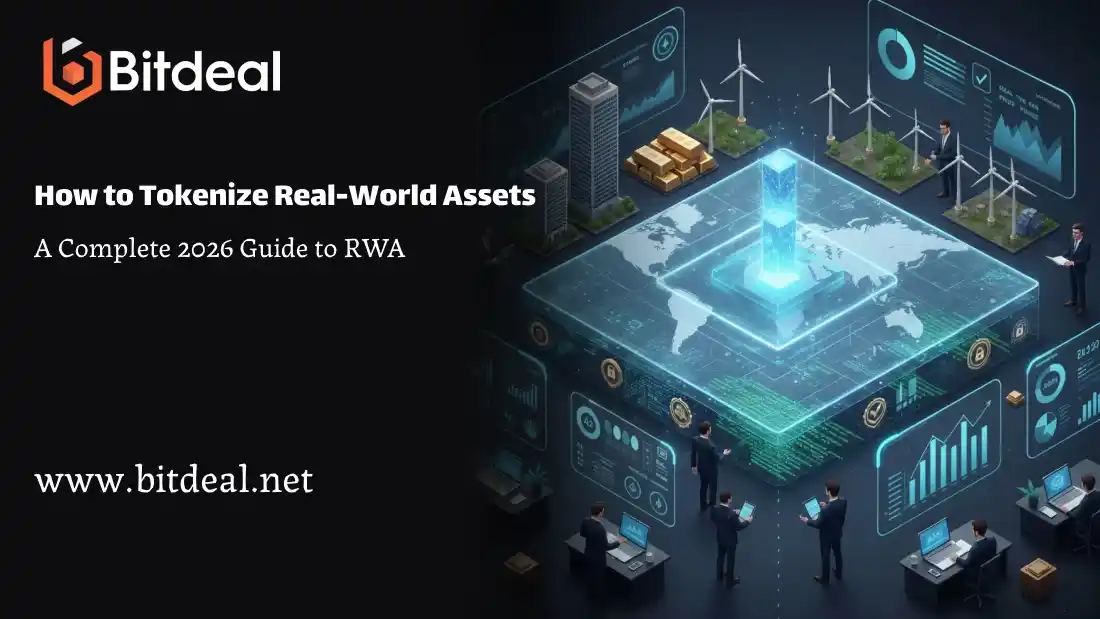
Tokenizing real-world assets is improving how we invest, trade, and manage tangible and financial resources. By converting physical or traditional financial assets into digital tokens on a blockchain, this method improves accessibility, transparency, and efficiency. From real estate and commodities to bonds and fine art, tokenization opens new opportunities for fractional ownership, expedited transactions, and increased participation in global markets, making asset management more flexible and accessible than ever before.
Understanding Real-World Asset (RWA) Tokenization
Real-world asset tokenization is the process of converting physical or financial assets into digital tokens on a blockchain. These tokens represent ownership rights or value tied to the underlying asset, making it easier to trade, transfer, or divide. This approach enhances openness, reduces intermediaries, and enables investors to participate in markets that were previously inaccessible or illiquid.
In simple terms, real-world asset tokenization allows assets like real estate, commodities, or financial instruments to be represented digitally, creating opportunities for broader access, faster transactions, and improved performance. By combining regular assets with blockchain technology, it provides a secure and verifiable way to manage and exchange value.
How Real-World Asset Tokenization Works
Asset tokenization follows a structured process that securely converts physical or financial assets into blockchain-based digital tokens.
Asset Identification and Legal Structuring
The first step is selecting a suitable asset and defining its legal ownership structure. This guarantees the asset can be digitally represented and meets regulatory and legal requirements.
Asset Evaluation and Digitization
The asset is professionally valued and converted into a digital representation. At this stage, tokenized asset examples may include real estate, commodities, bonds, or intellectual property, depending on the use case.
Smart Contract Creation
Smart contracts are developed to establish ownership rules, transfer conditions, and compliance logic. These contracts automate transactions and implement terms without manual intervention.
Blockchain Platform Deployment
The tokens are issued and managed on secure blockchain infrastructure. Choosing reliable RWA blockchain platforms is critical to ensure scalability, openness, and long-term asset management.
Distribution and Trading
Once deployed, tokens can be distributed to investors or traded on approved marketplaces, allowing small ownership and improved liquidity while maintaining records and security.
Key ERC Standards Used in Asset Tokenization
Key ERC standards are the technical base for securely creating, handling, and transferring tokenized assets while following rules.
ERC-7518
Built with compliance in mind for asset tokenization, this standard allows for identity on-chain, which makes it suitable for real-world assets that require proven ownership.
ERC-3643
ERC-3643, also called the T-REX standard, is designed and built completely with a focus on security tokens. The token standard provides functionality ranging from whitelisting, transfers, and regulatory compliance at a token level.
ERC-1400
ERC-1400 is a broad security token standard that integrates fungibles and non-fungibles. It handles divided ownership, regulatory requirements, and sophisticated control tools for security assets.
ERC-1155
This is a multi-token standard that allows both fungible and non-fungible tokens to co-exist in a single smart contract application. This standard is ideal for handling a high volume of tokenized assets with varying characteristics.
ERC-721
ERC-721 is also known as the NFT standard. The ERC-721 is usually applied in the creation of tokens that are non-fungible tokens. Examples include real estate units, artwork, and collectibles that have different values.
Types of Assets That Can Be Tokenized
A wide variety of physical, financial, and digital assets can be converted into blockchain-based tokens, depending on the use case and regulatory structure.
Real Estate
Residential, commercial, and industrial properties can be tokenized to allow fractional ownership, easier transfers, and improved liquidity compared to standard property transactions.
Commodities
Assets such as gold, silver, oil, and agricultural products can be represented digitally, allowing investors to trade commodity-based tokens without handling physical storage.
Financial Instruments
Traditional assets like bonds, stocks, and financial instruments can be tokenized to simplify registration, settlement, and ownership tracking while reducing intermediaries.
Art and Collectibles
Fine art, antiques, and rare collectibles can be tokenized to allow shared ownership and larger market access while maintaining proof of authenticity.
Intellectual Property and Rights
Patents, copyrights, music royalties, and licensing rights can be tokenized to create new revenue models and open royalty distribution.
Alternative and Revenue-Generating Assets
Assets such as carbon credits, infrastructure projects, and future revenue streams can also be tokenized, opening new investment opportunities beyond traditional markets.
Key Benefits of Tokenizing Real-World Assets
The tokenization of real-world assets adds efficiency, accessibility, and transparency to traditional models of asset and investment management.
Enhanced Liquidity
Tokenization also provides the means by which assets that were not so easy to trade before, such as properties and private investments, can be purchased and sold through digital tokens.
Fractional Ownership
High-value assets can be broken down into smaller parts so that more people can invest without having to invest in the whole asset.
Increased Transparency
It records all transactions on a blockchain and marks the information as immutable. This eliminates disputes and any form of fraud. It shows the transparent history of ownership.
Fast and Cost-Efficient Transactions
By cutting out middlemen and using smart contracts to automate processes, transaction times and costs are decreased.
Global Market Access
This gives investors within various geographic locations the opportunity to invest in tokenized assets without the usual limitations.
Operational Efficiency
One of the key advantages offered by asset tokenization is asset management, since the creation, compliance, transfer, and reporting can all be achieved online with greater accuracy.
Conclusion
Tokenizing real-world assets is changing asset ownership and trading by making things more liquid, open, and accessible. It lets companies digitize physical and financial assets well using blockchain. As more people use it, tokenization is becoming key in today's digital finance world. Picking the right tech partner is key to building solutions that are secure and follow the rules. Bitdeal helps businesses through the whole tokenization process with know-how and platforms that can grow with you. If executed effectively, asset tokenization development helps companies get long-term value from real-world assets.
Get A Demo
We are glad to announce that, Bitdeal is making one more milestone in its journey. As Web3 technologies becomes more dominant and lucrative, bitdeal sets its footmark in AI and Gaming Space. Explore our all-new AI and Gaming Solutions below here.