


Blog | AI Solutions
The Role of AI in Building Intelligent and Connected Transportation Networks
This blog explains the role of AI in building intelligent and connected transportation networks, covering core technologies, benefits, real-world use cases, and future trends shaping smart mobility in 2026.
- Blogs

Role of ai in building intelligent and connected transportation networks
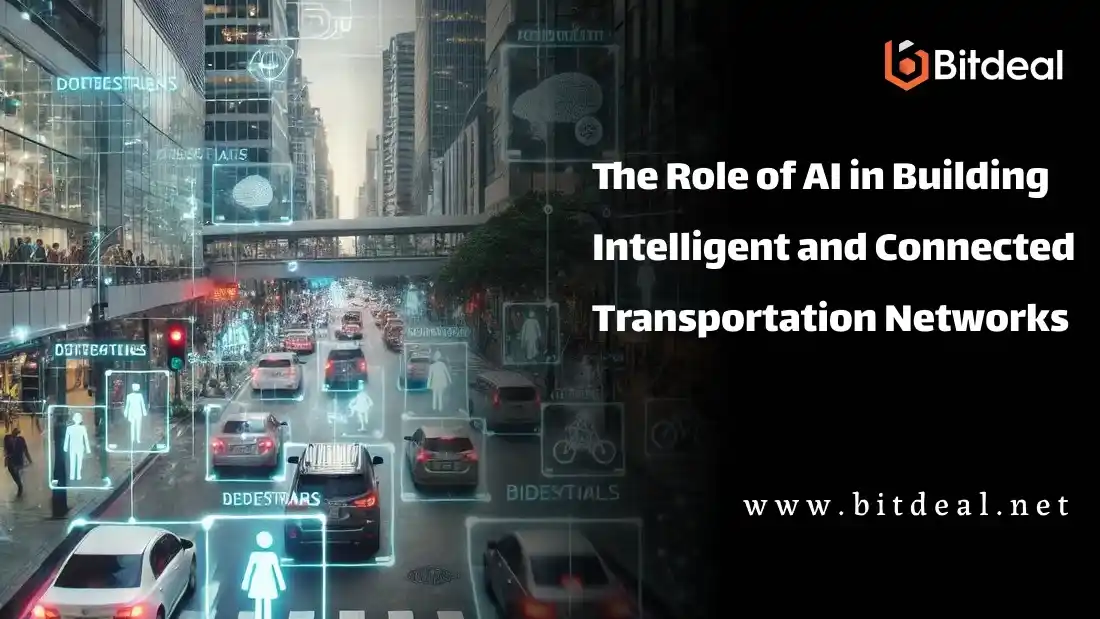
In 2026, AI in transportation is reshaping how people and goods move. Predictive analytics help reduce travel delays by up to 30%, while autonomous systems significantly improve road safety by reducing accidents across large vehicles. From real-time traffic management to smarter logistics powered by machine learning and computer vision, AI is helping transportation networks operate more efficiently, saving the industry an estimated $15 billion every year.
What Is AI in Transportation? 2026 Guide
AI in transportation is transforming how people and goods move by integrating intelligent systems, predictive analytics, and autonomous technologies. Modern vehicles, traffic networks, and logistics platforms now use advanced algorithms to optimize routes, improve safety, and reduce operational costs. Leading AI development service companies focus on creating platforms that combine real-time data with machine learning to improve mobility efficiency and reliability.
At its core, AI allows smart transportation systems that monitor traffic, predict congestion, and dynamically adjust signals or routes for smoother flow. From autonomous fleets to predictive maintenance in logistics, these systems form the foundation of next-generation mobility. By 2026, AI isn’t just a tool; it’s an essential component of intelligent, connected transportation ecosystems.
How AI Powers Smart Mobility Transformation
AI is also shifting the means of transporting people and goods in innovative ways through intelligent and optimal decision-making.
Predictive Traffic and Congestion Solutions
The system uses data from the past and real-time information to make predictions on traffic flow.
Navigation for Autonomous Vehicles
Self-driving cars and trucks use AI algorithms to analyze sensor inputs and make quick decisions about operating a vehicle.
Smart Public Transport Scheduling
It will improve routes, scheduling, and the usage of vehicles to provide the best services possible for commuters.
Intelligent Logistics and Delivery Systems
AI-based platforms optimize delivery routes, warehouse management, and demand forecasting for faster and more efficient supply chains.
Improved Safety and Incident Response
Real-time monitoring of AI allows for the prediction of potential accidents in addition to the detection of risks.
Data-Driven Urban Planning
AI provides insights for infrastructure development and urban planning, promoting the concept of connected mobility solutions, thus clearing the way for smart cities.
Core AI Tech: ML, Vision, and Predictive Tools
The foundation of smart transport in the year 2026 is based on the use of artificial intelligence tools that provide real-time analysis insights.
Machine Learning Algorithms (ML)
ML algorithms analyze traffic flow, optimize routes, and allow predictive maintenance of vehicles and traffic infrastructure.
Computer Vision Systems
Computer vision AI analyzes data from camera views and sensors for obstacle detection, traffic flow monitoring, and self-navigation capabilities.
Predictive Analytics Tools
AI for Predictive Analytics uses historical and real-time data to predict congestion patterns, identify maintenance needs, and anticipate demand across transportation networks.
IoT-Integrated Monitoring
Sensors and connected devices provide data to AI platforms, which allow intelligent decisions for vehicles, fleets, and traffic systems.
Edge AI Deployment
On-device AI means data processing is localized. This reduces latency in autonomous cars, real-time traffic management, and other safety-critical systems.
Data Management and Cloud Platforms
Centralized and cloud-based solutions for AI can offer data storage, processing, and protection in transporting various solutions for scalable Intelligent Transportation Systems (ITS).
Top Benefits: Safety, Efficiency, and Cost Savings
AI in transportation yields measurable advantages that improve operational performance, user experience, and overall mobility in 2026.
Improved Road Safety
AI monitoring, predictive alerts, and autonomous systems lower the rate of accidents, therefore protecting passengers, drivers, and cargo.
Optimized Traffic Flow
The smart algorithms manage congestion, adjust the signals, and even work out the routes for less traffic to decrease travel time and increase passenger satisfaction.
Reduced Operating Costs
AI helps in optimizing vehicle management, fuel consumption, and maintenance schedules that reduce overheads and improve efficiency among operators.
Energy and Sustainability Gains
It allows efficient routing and predictive planning that reduces emissions, hence cleaner Smart Transportation Systems and sustainable mobility.
Better User Experience
Real-time updates, precise ETAs, and adaptive routing add to the convenience for commuters and stakeholders of logistics.
Scalable Network Management
AI serves as the underlying technology that allows transportation systems to absorb increasing vehicle sizes, urban growth, and increasingly complicated multi-modal networks with minimal disruption.
Real-World Cases: Autonomous Cars to Logistics
AI is also working to transform transportation with some real-world applications that make transportation more efficient and connected.
Autonomous vehicles
Autonomous cars and trucks use AI for navigation, obstacle detection, and the minimization of accidents.
Smart Public Transportation
The AI helps in optimizing the transportation schedules, paths, and allocation of buses and trains, increasing reliability and customer satisfaction.
Intelligent Logistics and Supply Chains
Artificial Intelligence-based delivery services use route planning, demand forecasting, and warehouse operations to allow efficient and affordable deliveries.
Traffic Management Systems
Cities use AI-based monitoring systems to analyze congestion, predict incidents, and change traffic light signals for smoother traffic movement.
Fleet Monitoring and Predictive Maintenance
The vehicles supply the AI system with the necessary information for the early identification of technical problems.
Connected Mobility Solutions in Smart Cities
AI provides connectivity between cars, public transport, and infrastructure. This results in integrated and real-time Connected Mobility Solutions.
The Future of AI-Powered Transportation in 2026
Emerging AI technologies are going to completely rewrite the idea of mobility as transportation becomes safer, smarter, and even more efficient by the year 2026.
Scaling Autonomous Fleets
It'll be the vehicles that handle logistics, public transit, and ride-sharing with the fewest instances of human error and lower operation costs.
Smart City Integrated Infrastructure
Smart traffic signals, sensors, and other connected devices will make for seamless coordination between the vehicles and the roads with urban infrastructure.
Predictive and Adaptive Traffic Management
Advanced AI models will predict congestion and dynamically optimize traffic flows for faster, safer journeys.
AI-driven public transit experiences
The journey will be updated in real time, and adaptive scheduling and route optimization will be used to make it even more efficient and satisfying for passengers.
Green and Sustainable Mobility
AI will promote energy-efficient routing and reduce emissions with contributions to eco-friendly transportation initiatives.
Digital Transformation in Transportation around the World
Integration of AI will accelerate the digital transformation in transportation, thus enabling connected, data-based, scalable mobility solutions throughout the world.
Conclusion
In 2026, AI will change transportation by making roads safer, traffic smarter, and logistics more efficient. From self-driving cars to smart predictive traffic management systems, the technology is creating newer ways of communication that benefit cities, travelers, and enterprises as well.
Organizations looking to take advantage of these innovations need to collaborate with an experienced AI Development Company. Bitdeal offers best-in-class AI development solutions along with enterprise-grade AI development services in laying down Intelligent, scalable, and future-ready transportation systems, assuring maximum efficiency, safety, and excellence in operations.
Get A Demo
We are glad to announce that, Bitdeal is making one more milestone in its journey. As Web3 technologies becomes more dominant and lucrative, bitdeal sets its footmark in AI and Gaming Space. Explore our all-new AI and Gaming Solutions below here.