


Blog | Cryptocurrency
What You Should Know About the True Cost of Building a Crypto Wallet Like MetaMask
Building a crypto wallet like MetaMask involves more than basic development costs. This guide breaks down key cost drivers, security considerations, technology choices, and scalability factors you must evaluate before launching a non-custodial crypto wallet.
- Blogs

Cost of building crypto wallet like metamask
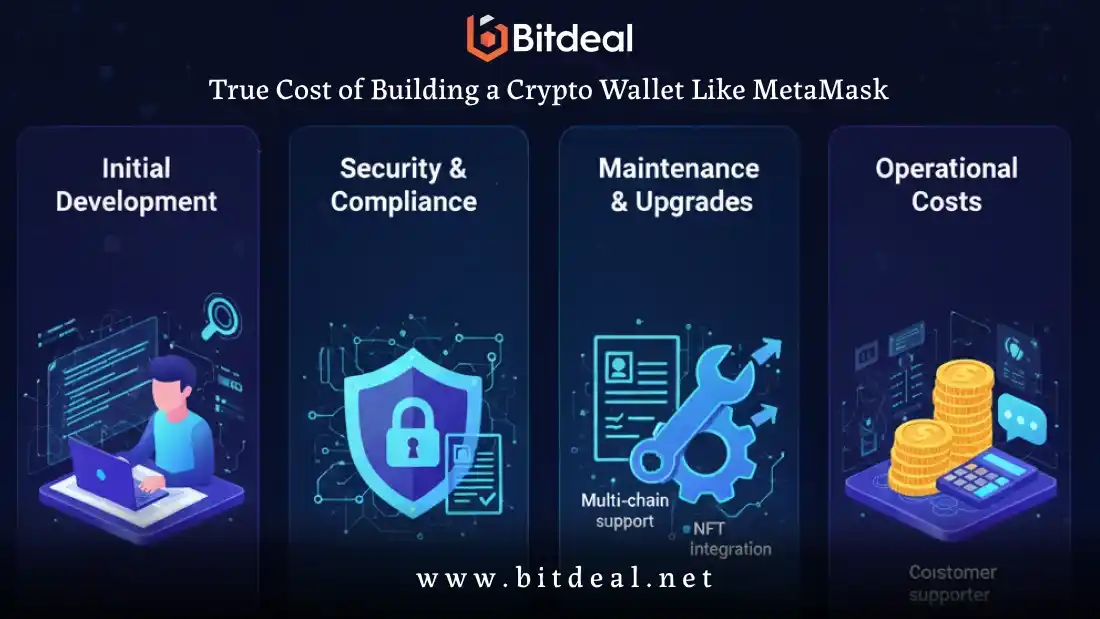
Building a crypto wallet like MetaMask involves far more than creating a simple interface for storing digital assets. Behind the familiar browser extension or mobile app lies a complex system of blockchain integrations, security mechanisms, and ongoing infrastructure requirements. Each of these elements plays a direct role in determining the overall cost of development.
Understanding the true cost of building a MetaMask-like wallet requires looking over basic features and considering the technical, security, and operational decisions involved. From supporting multiple networks to protecting private keys and maintaining long-term performance, every choice contributes to the final investment required to launch and maintain an effective crypto wallet.
Why MetaMask-Like Wallets Are in High Demand
MetaMask-style wallets have become a favorite option for users entering the Web3 ecosystem because they combine asset management with direct blockchain interaction. Instead of acting as passive storage tools, these wallets allow users to actively engage with decentralized applications, DeFi platforms, and NFT marketplaces from a single interface. This change toward social wallets has significantly increased demand among both users and businesses.
A major driver of this demand is DApp browser integration, which allows users to connect easily with decentralized platforms without depending on third-party tools.
Another key reason is multi-chain support (EVM & non-EVM), which allows a single wallet to operate across multiple blockchain networks. As users increase their assets beyond one ecosystem, wallets that support different chains become necessary rather than optional. For businesses aiming to enter this space quickly, solutions like a MetaMask Wallet Clone Script are often explored as a practical starting point to satisfy this growing market demand.
Top 5 Must-Have Features for a Crypto Wallet
A stable crypto wallet is characterized by features that prioritize user control, security, and usability while facilitating seamless interactions with real-world blockchain applications.
1. Non-Custodial User Control
A strong wallet is built on non-custodial architecture, so users can keep full ownership of their assets without depending on third-party custody. This approach builds trust and aligns with the core principles of decentralization.
2. Secure Private Key Control
Protecting user assets starts with private key encryption, which protects sensitive credentials from unauthorized access. Advanced encryption techniques are critical for preventing breaches and wallet hacking.
3. Reliable Account Recovery Options
Wallets must support Seed Phrase Recovery (SRP) to help users get access in case of device loss or failure. A clear and secure recovery process reduces the risk of permanent asset loss.
4. Smart Transaction Fee Handling
Successful wallets include EIP-1559 gas estimation to provide open and optimized transaction fees. This feature improves user confidence by reducing unsuccessful or overpaid transactions.
5. Simplified User Experience Layer
Modern wallets are beginning to adopt account abstraction (ERC-4337), allowing features like gasless transactions and flexible authentication. This significantly improves usability for non-technical users while maintaining blockchain security.
What Affects the Cost of Crypto Wallet Development?
The construction costs of a crypto wallet are influenced by a variety of factors that are technically and strategically associated with developing a crypto wallet.
Scope and Feature Depth
The final pricing is highly dependent on the MVP Wallet Features being included in the initial setup. Developing and maintaining a wallet with standard functionality will be significantly less expensive compared to one that incorporates highly advanced transactional capabilities and superior usability.
Technology and Blockchain Choices
The presence of various blockchain networks, coding platforms, or integrations is one of the key factors influencing the server costs of Web3 development. More such networks or functions increase the complexity of the developmental task.
Design, UX, and Level of Customization
An uncomplicated interface can be prototyped quickly, but providing a very elegant and branded wallet with unique flows will demand more design input and more front-end development effort.
Security and Risk Control
The degree to which the security system is actually implemented, like audits, tests, or threat modeling, adds to the expense but is vital for maintaining end-user trust.
Post-Launch
Other than development, subsequent costs such as upgrades, patching, and optimization fees under the software maintenance fees should always be considered in the overall cost from the very beginning.
Estimated Cost Breakdown for Building a MetaMask-Like Wallet
The amount for a MetaMask-like wallet will depend on how it’s going to be developed.
Basic Wallet (MVP-Level)
A wallet with core functionalities and quicker time to market often adopts a white-label crypto wallet solution. The solution cuts development time and expenses but still handles basic functionalities such as storing assets or performing basic transactions.
Infrastructure and Network Costs
For facilitating real-time interactions on the blockchain, there is a need for robust blockchain node infrastructure, which has a direct impact on operational costs. Furthermore, there are RPC endpoint costs that need to be taken into account for maintaining network connectivity and transactions.
Investment in Security and Audit
Advanced wallets need a smart contract security audit to find security vulnerabilities and offer protection to their users' assets. Although it increases the upfront costs of creating a wallet, the potential for exploits and huge long-term financial losses significantly decreases.
Compliance and Regulatory Readiness
For wallets targeting regulated markets, integrating KYC/AML compliance features into a MetaMask wallet clone script increases both development and legal costs. The steps described above are necessary, as they will ensure lawful operation and build institutional trust.
Security and Compliance: Where You Shouldn’t Cut Costs
Strong security and regulatory alignment create the foundation of user trust and long-term wallet sustainability.
Core Security Architecture
A MetaMask-like wallet handles sensitive assets and passwords, making security a non-negotiable investment. From secure key storage to transaction validation, shortcuts in architecture design can lead users to irreversible losses and reputational damage for the product owner.
Continuous Monitoring and Threat Prevention
Security is not a one-time implementation. Regular updates, security updates, and monitoring systems are essential to defend against new attack methods in the blockchain ecosystem.
Compliance-Ready Development Approach
Wallets designed for broader adoption must be built with regulatory awareness from day one. Choosing a professional cryptocurrency wallet development service helps guarantee that security frameworks and compliance requirements are integrated correctly, reducing legal risks and costly rework later.
Post-Launch Expenses: Maintenance and API Fees
Launching a crypto wallet is just the beginning, as ongoing technical and operational costs take center stage regarding long-term sustainability.
Ongoing Maintenance and Updates
After the launch, a wallet may need continuous updates to fix bugs, improve performance, and remain compatible with the constantly changing blockchain protocols. The regular maintenance guarantees stability and prevents small issues from resulting in major failures.
API Usage and Network Connectivity
Wallets depend on third-party APIs to fetch the balance, transaction data, and network status updates. As users increase, increased API usage leads to higher costs tied to request limits and performance guarantees.
Infrastructure Scaling Costs
With increased transaction volume, the scaling of the backend servers and their supporting infrastructure has to be similarly scaled up through techniques like load balancing, cloud hosting upgrade, and database optimization.
Security Patching and Monitoring
A post-launch security effort involves monitoring, mostly for suspicious activity; it involves applying patches and responding to emerging threats. These ongoing activities are crucial in ensuring the security of user funds and credibility for the platform.
Changes to Features and UX Improvement
The expectations of the user are constantly changing, and there is a need for regular development and improvement in the functions and interfaces for a better crypto wallet.
Customer Support and Operations
Processing inquiries from users, recovery problems, and tech support can also increase operational costs. Specialized support personnel and software may become necessary as usage scales up.
Conclusion
Building a crypto wallet like MetaMask is a smart investment that goes much further than initial development. From feature planning and infrastructure setup to security, compliance, and long-term maintenance, each decision directly impacts both cost and product quality. A clear understanding of these factors helps businesses avoid hidden expenses and plan for healthy growth.
Collaborating with an experienced cryptocurrency wallet development company like Bitdeal can simplify this journey by combining technical expertise with a low-cost development approach. With the right planning and execution, businesses can launch a secure, scalable wallet that delivers real value while staying aligned with long-term Web3 goals.
Get A Demo
We are glad to announce that, Bitdeal is making one more milestone in its journey. As Web3 technologies becomes more dominant and lucrative, bitdeal sets its footmark in AI and Gaming Space. Explore our all-new AI and Gaming Solutions below here.