


Blog | Web 3
Securing Your Web Application Technology Stack: Essential Security Measures
This guide explains why web application security matters more than ever in 2026 and outlines practical measures to secure your entire technology stack.
- Blogs

Web application technology stack
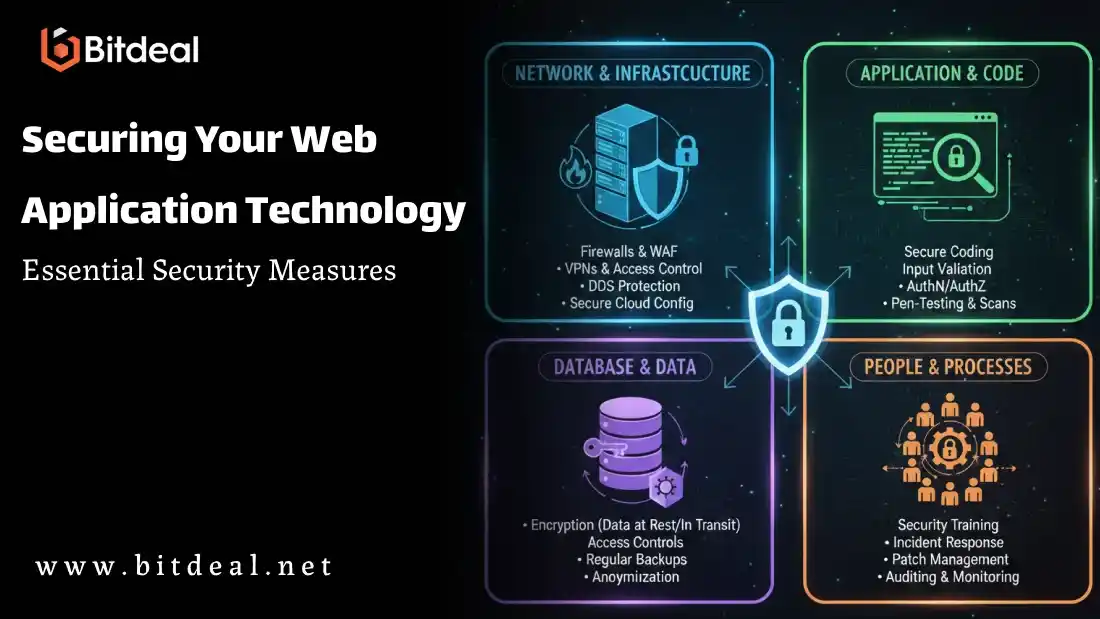
Web application security is more important than ever. In 2025, data breaches cost businesses an average of $4.88 million, and the risks continue to grow in 2026 with AI-powered attacks, zero-day vulnerabilities, and tighter regulations like the EU AI Act. Even today, over 70% of web applications are exposed to common security issues such as injection attacks and weak access controls.
The good news is that applying the right security measures across your entire technology stack can reduce these risks by up to 60%. This guide explains why web app security matters now, breaks down protection at every layer of your tech stack, and shares practical best practices, from frontend development to continuous monitoring.
Why Web App Security Matters More in 2026
Web applications are facing more risks in 2026 as cyberattacks become more frequent, automated, and intelligent. Businesses are no longer dealing with simple threats; AI attacks, zero-day weaknesses, and stricter compliance requirements have raised the stakes. Following web application security best practices early in development is now essential to protect sensitive data, maintain user trust, and avoid costly downtime.
Another major issue is the growing exposure to OWASP Top 10 threats in 2026, such as broken access control, injection flaws, and insecure authentication. As web applications grow more complex, even small security gaps can lead to serious breaches. This makes security a top business priority rather than just a technical checklist item.
Top Threats Targeting Your Tech Stack
Modern web applications face a wide range of security threats that can impact every layer of the technology stack if left unprotected.
Injection Attacks
Attackers exploit input fields to inject illegal code into applications. These attacks can lead to data leaks, unauthorized access, or complete system compromise if validation is weak.
Broken Authentication and Access Control
Poorly implemented login systems and permission checks allow attackers to gain access to sensitive areas. This often results in account purchase and data exposure.
API Exploits
APIs are a common attack surface due to improper authentication, excessive data exposure, and limitations. A single unsafe API can expose the entire application.
Misconfigured Servers and Services
Default configurations, open ports, and outdated software make systems easy targets. Misconfigurations are one of the fastest ways attackers gain entry.
Client-Side Attacks
Threats like cross-site scripting (XSS) target users directly through the browser. These attacks can steal session data or manipulate user actions without detection.
Data Breaches and Leakage
Unprotected data storage and insecure data transfer can expose sensitive user and business information. Even minor leaks can cause major financial and brand damage.
Frontend Security: 5 Best Practices
This is because the frontend is typically the first interaction point that the user has with the system.
Validate and Sanitize User Inputs
It is always suggested to validate and sanitize inputs on the client-side to avoid any illegal scripts being executed. This will help minimize cross-site scripting attacks.
Provide Secure Authentication Paths
Implement secure login systems, strict password policies, and session management to secure users’ accounts.
Defend against Client-Side Attacks
Use of proper content security policies and the elimination of inline scripts make one less vulnerable to browser threats. This is one of the frontend techniques necessary for securing interactions.
Use HTTPS and Secure Cookies
Encrypting data and cookies also protects users against intercepted information that could be used for illicit online activities.
Updating Front-End Libraries Regularly
Outdated frameworks and libraries may include known vulnerabilities. It is crucial to maintain the latest versions of the dependencies to avoid security holes that can be exploited.
Backend and Server Hardening Checklist
A secure backend is the central support point for any web application and provides safety for the application’s core logic and system access processing.
Server Configuration to be Secure
Disable unused services, close unnecessary ports, and disable default access rights. Having a basic server is significantly more difficult to attack.
Implement Strict Authentication And Authorization Processes
Implement role-based access control and apply least privilege. Any service or user can only be granted access to whatever it or they need.
Regular Patching and Updates
Ensure that you keep the operating system, frameworks, and server software updated. This provides you with time to address any loopholes that might be exploited by attackers.
Firewalls and Network Segmentation
Firewalls and segmented networks constrain lateral motion for systems. This is a form of containment, which is effective in curtailing breaches.
Allow Logging and Server Monitoring
Monitoring server activity, logins, and odd events. The sooner threats can be addressed, the better.
Hardening APIs and Backend Services
Protect APIs using authentication, rate limiting, and input validation. A properly hardened backend server ensures that the backend services remain AEC/DDOSR to their maximum extent.
Database Protection + Data Encryption
The database contains very sensitive business and user information and is an attractive target for an attacker.
Limit Database Access
Provide database access to the minimum services and persons necessary. By applying strict database security, you could prevent unwanted database snooping.
Encryption of data at rest / In Transit
Sensitive data should, therefore, always be encrypted, whether stored or sent across systems. Implementing effective database encryption strategies can therefore help secure data in case illegal individuals manage to access the systems in place.
Secure Database Credentials
Do not include credentials in code or configuration files. Store secrets in secure vaults and environment variables instead.
Monitoring Database Activity
Allow logging for analysis of unusual queries or access patterns. Early detection will go a long way in preventing large-scale data breaches.
Backup and Recovery Strategy
The backups should always be encrypted. There should be regular testing of the recovery processes.
Monitoring, Testing, and Compliance Roadmap
Unlike other chores that only require a single completion, the process of ensuring security is an ongoing one that needs continuous visibility and testing, as well as regulation compatibility.
Continuous Security Monitoring
Real-time monitoring assists in recognizing unusual activity, intrusion attempts, or performance issues. Automation of alerts helps to react quickly to an incident before potential damage occurs.
Vulnerability Scanning and Tests
Regular vulnerability scanning and pen testing will go a long way in identifying weaknesses before hackers exploit them. Software testing needs to become a cyclic activity during every release and not just an annual event.
Incident Response Plans
A solid approach to responding to incidents will help teams understand exactly what to do in the event of an attempted security breach. Roles and responsibilities will help limit downtime.
Compliance and Regulatory Readiness
Best security practices have to be compatible with the regulations in the various sectors in which organizations operate, along with the regional laws. This will prevent any legal repercussions while also fostering greater trust among customers.
Security Audits and Continuous Improvement
Regular audits enable the evaluation of effectiveness and optimize areas for improvement. Security maturity improves with regular evaluation and enhancement.
Teaming for Long-Term Security Success
Collaboration with an experienced technology partner helps integrate security all the way through the web app stack. Monitoring, compliance, and continuously updating strategies for combating ever-changing threats ensure long-term security.
Conclusion
It is essential to secure your web app technology stack in the year 2026 with a holistically proactive approach, covering from front-end security to continuous monitoring. Businesses taking on a proactive approach to securing their apps with effective methodologies right from the start will translate to low-risk exposure with continued adherence to regulatory requirements and customer trust. Engaging with Bitdeal, a reliable digital transformation company, assists in formulating a future-proofed approach to securing apps with advancing technologies and trends.
Get A Demo
We are glad to announce that, Bitdeal is making one more milestone in its journey. As Web3 technologies becomes more dominant and lucrative, bitdeal sets its footmark in AI and Gaming Space. Explore our all-new AI and Gaming Solutions below here.